
Overview
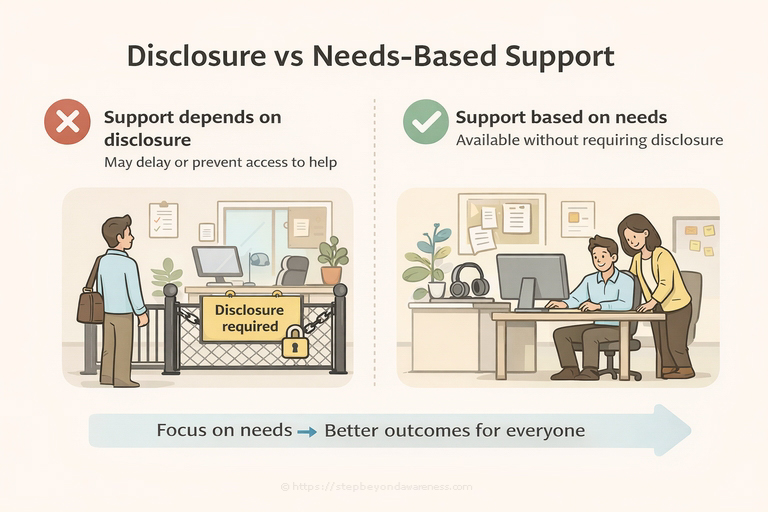
People shouldn’t need to disclose a diagnosis or condition in order to receive support or adjustments. Support should be based on what someone needs.
Where there are signs that someone may benefit from support, adjustments should be considered proactively – without waiting for disclosure.
If someone chooses to disclose, their privacy should be respected. It helps to give clear reassurance about how their information will be handled. Knowing that personal information will not be shared without consent can help people feel safer, more confident, and better supported.
The next step is Person-Centred Practice – working with the individual to understand their needs, explore options, and agree what support will help.
Reasons for not Disclosing
People may choose not to disclose a condition for many valid reasons.
Some are outlined below:
- Having a diagnosis can be a privilege.
Barriers to assessment and diagnosis, including lack of awareness (e.g. where people may not realise they’re neurodivergent), can delay or prevent access. - People with multiple or less well defined needs may not meet the diagnostic threshold for any single condition, despite having significant support needs.
This concept can be described by Prof. Amanda Kirby’s ‘balls in a bucket’ analogy. - People may have personal reasons for choosing not to disclose, including:
- Lack of psychological safety – only 32-38% of neurodivergent employees report feeling psychologically safe to disclose (Neurodiversity Index Report 2026, City & Guilds Foundation)
- Previous negative experiences with disclosure
- Taking time to process or come to terms with a recent diagnosis
- Concerns about stigma or discrimination
E.g. impact on career progression, relationships, or being treated differently.
Focussing on needs rather than requiring disclosure helps reduce the impact of these barriers and supports better outcomes for everyone.
For further reading, see:
 Step Beyond Awareness